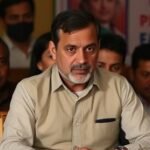
In recent developments surrounding the violent protests in Leh, Jammu and Kashmir (J&K) Chief Minister Omar Abdullah has taken a firm stand defending the Congress party. Abdullah has attributed the clashes to failures of the Bharatiya Janata Party (BJP), highlighting the political turmoil that has emerged in the region. This article delves into Abdullah’s remarks, the backdrop of the unrest, and what this means for the region’s future.
The Context of the Ladakh Violence
The protests in Leh erupted over various demands including statehood and rights for the Ladakhi people. This unrest reached a peak, resulting in violence that targeted offices of the BJP and the Hill Council. The situation intensified the debate on political accountability and governance in the region.
Omar Abdullah’s Defense of Congress
Omar Abdullah has publicly defended the Congress, asserting that it is unfair to hold the party responsible for the recent violence. He argued that blaming Congress is an evasion of the BJP’s own failures in addressing the issues that triggered the turmoil.
- Emphasized that the BJP administration failed to listen to local demands.
- Criticized the BJP for instigating tensions rather than offering constructive solutions.
Community Reaction and Support from Activists
Prominent activist Sonam Wangchuk has echoed Abdullah’s sentiments, adding weight to the argument. Wangchuk has long been an advocate for the rights of Ladakhis. His support illustrates a broader dissatisfaction with the central government’s handling of local issues.
- Wangchuk criticized the BJP’s governance model in Ladakh.
- He urged for more inclusive dialogues among stakeholders in the region.
BJP’s Response to the Allegations
In response to Abdullah’s remarks, the BJP has countered by accusing the Congress party of seeking to gain political mileage amidst the chaos. They argue that Abdullah’s statements are a distraction from the actual governance issues faced in the region.
- BJP insists that they are focused on restoring order and addressing grievances.
- Claims that Abdullah’s criticisms are an attempt to shift blame.
The Broader Implications for Ladakh
The ongoing unrest and political blame game have broader implications for Ladakh’s future. The demands for statehood and local governance reflect a deep divide between the Ladakhi populace and the central government.
- The need for justice and representation is paramount in resolving tensions.
- Ladakhis are increasingly vocal about their rights and aspirations.
Conclusion
Omar Abdullah’s defense of Congress amidst the Ladakh violence highlights a complex interplay of local grievances and national politics. As both Abdullah and Wangchuk continue to voice their support for the Ladakhi people’s rights, it is clear that the need for effective governance and genuine dialogue is more pressing than ever. The future of Ladakh depends on how the central government addresses these issues, and whether they can foster an environment of trust and stability.