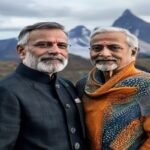
At the recent India-Nordic Summit, a seemingly simple word became a powerful symbol of growing international relations. Iceland’s Prime Minister, Kristrún Frostadóttir, while sharing the stage with Prime Minister Narendra Modi, drew attention to a word she presented as ‘purely Icelandic’: sambandh. This moment, both intriguing and heartwarming, perfectly encapsulates the deepening connections between India and the Nordic nations, particularly Iceland. It highlights a shared desire for stronger bonds, greater understanding, and enhanced collaboration across diverse cultures and economies.
The ‘Sambandh’ Moment: A Bridge of Understanding
The interaction between Iceland PM Frostadóttir and PM Modi during the Nordic conference created a memorable highlight. The Iceland PM used the term ‘sambandh,’ remarking that it was a ‘purely Icelandic word’ – a statement that sparked curiosity and warmth. While ‘sambandh’ is, in fact, a widely recognized Hindi word meaning ‘relationship,’ ‘connection,’ or ‘bond,’ its usage in this context was profound. It symbolized a genuine eagerness from the Iceland PM to forge closer ties and a testament to the universal language of connection that transcends geographical boundaries.
This lighthearted, yet significant, moment underscored the spirit of cooperation that characterized the India-Nordic Summit. It demonstrated how even a linguistic play can serve to emphasize the desire for stronger bilateral talks and mutual understanding between world leaders and their respective nations.
Strengthening India-Nordic Relations: A Strategic Partnership
The India-Nordic Summits have rapidly evolved into crucial platforms for strategic engagement. Leaders from India and the Nordic nations, including Iceland, have consistently agreed to elevate their cooperation across various sectors. These high-level discussions foster a shared vision for sustainable development, innovation, and digital transformation.
Prime Minister Modi’s engagement with Nordic leaders reflects India’s growing interest in strengthening alliances with these forward-thinking economies. The emphasis is on building partnerships that address global challenges, from climate change and renewable energy to technological advancements and economic resilience. These summits are pivotal in setting the agenda for future collaborations and reinforcing existing ‘sambandh’.
Economic Ties: A Surge in Investment and Free Trade
One of the most tangible outcomes of enhanced relations between India and the Nordic nations is the significant increase in economic activity. As Prime Minister Modi highlighted, there has been a notable surge in investment, particularly from Iceland into India. This growing financial ‘sambandh’ is often facilitated by progressive free trade agreements (FTAs) that reduce barriers and encourage cross-border commerce.
The Nordic countries, known for their innovation in green technology, sustainable solutions, and digital infrastructure, find a robust and growing market in India. Conversely, India offers vast opportunities for investment and collaboration in emerging sectors. Bilateral talks between PM Modi and Iceland PM Frostadóttir often focus on identifying these mutually beneficial areas, paving the way for further economic growth and job creation in both regions.
Beyond Bilateral: India-Iceland’s Unique Connection
The relationship between India and Iceland, while part of the broader India-Nordic framework, holds its own unique potential. Iceland, with its rich geothermal resources and expertise in renewable energy, presents a compelling partner for India’s ambitious clean energy goals. Similarly, India’s thriving IT sector and massive consumer market offer considerable opportunities for Icelandic businesses.
The bilateral discussions between PM Modi and Iceland PM Kristrún Frostadóttir during the India-Nordic Summit underscore a commitment to exploring these specific avenues. Beyond trade and investment, there is a growing interest in cultural exchange and academic collaboration, fostering a deeper ‘sambandh’ that goes beyond economic metrics. This involves sharing knowledge, technology, and even linguistic nuances, much like the memorable ‘sambandh’ moment itself.
The Future of India-Nordic ‘Sambandh’
The trajectory of India-Nordic relations points towards a future of continued growth and deepened strategic partnership. High-level diplomatic engagements, such as PM Modi’s upcoming visit to Norway in May 2026 for the 3rd India-Nordic Summit, are instrumental in maintaining this momentum. These gatherings provide vital platforms for leaders to review progress, address new challenges, and chart future courses of action.
The ‘sambandh’ cultivated through these interactions extends beyond governmental talks, fostering connections between businesses, academic institutions, and people. It signals a collective commitment to leveraging mutual strengths for global good, ensuring that the bonds forged today lead to lasting prosperity and understanding for generations to come. The initial intrigue around a ‘purely Icelandic word’ has blossomed into a symbol of a dynamic and evolving partnership.
Forging Deeper Connections
The unique moment when Iceland PM Kristrún Frostadóttir shared the word ‘sambandh’ with Prime Minister Modi served as a powerful reminder of the universal desire for connection and collaboration. This event, set against the backdrop of strengthening India-Nordic relations, highlights a future brimming with potential. From increasing investments and free trade agreements to shared goals in sustainability and innovation, the ‘sambandh’ between India and the Nordic nations, particularly Iceland, is undoubtedly growing stronger. As leaders continue their bilateral talks and convene at future summits, the spirit of mutual respect and cooperation will continue to forge deeper, more meaningful ties.