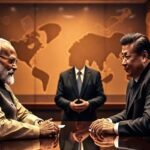
In a recent address, former U.S. President Donald Trump has raised concerns over the trade dynamics between the United States and India, categorizing the relationship as a “one-sided disaster.” With global economic tensions escalating, Trump’s remarks underscore the complexities involved in international trade policies. His comments came on the heels of India’s willingness to reduce tariffs on U.S. goods, which he argues comes too late to rectify longstanding trade imbalances.
Understanding the ‘One-Sided Disaster’
Trump’s characterization of the trade relationship reflects a broader sentiment among U.S. officials regarding India’s trade practices. As he noted:
- India imposes high tariffs on U.S. products, affecting market access.
- There are perceptions of unfair trade practices that favor India.
This imbalance has prompted numerous discussions on how both nations can better align their trade strategies for mutual benefit. Trump’s assertion that it’s “getting late” for India to make concessions highlights a growing impatience from the U.S. side.
India’s Offer to Cut Tariffs
In an interesting turn of events, India has expressed a willingness to eliminate tariffs on U.S. goods entirely. Trump stated that India’s offer comes at a critical time, yet he questioned the timing of this offer:
- He emphasized it should have been made “years ago.”
- Trump’s remarks indicate that late concessions may not be sufficient to address the trade gap.
This willingness raises questions about future negotiations and whether India will follow through. A reduction to zero tariffs could benefit U.S. exporters and help mitigate the perceived trade imbalance.
Impact of U.S. Tariffs on India
Trump’s administration previously imposed additional tariffs on Indian goods, particularly in relation to crude oil imports. These tariffs have been characterized as:
- “A disrespectful and unproductive approach” towards a close ally.
- A potential hindrance to strengthening trade relations further.
The economic repercussions of these tariffs can feel significant on both sides, affecting consumers and businesses alike. Understanding the long-term effects is crucial for both nations moving forward.
Trump’s Critique of Russia’s Oil and Arms Trade
Aside from discussing U.S.-India relations, Trump also directed criticism towards India’s continued engagement in trade with Russia, particularly regarding oil and arms. His points included:
- India’s reliance on Russian arms amidst geopolitical tensions is concerning.
- The energy trade with Russia complicates U.S.-India relations, potentially straining their alliance.
These criticisms reflect broader worries about national security and economic dependence on adversaries, underscoring the need for strategy realignment.
The Future of US-India Trade Relations
The evolving landscape of U.S.-India relations will depend on reciprocal trade actions. As both nations strive to strengthen ties, considerations include:
- The possibility of trade agreements that balance tariffs effectively.
- Enhanced cooperation in sectors like technology and defense to align interests.
Moving forward, U.S.-India relations could greatly benefit from an open dialogue that addresses tariff issues while promoting equitable trade practices.
Conclusion
In conclusion, Donald Trump’s recent comments on U.S.-India trade relationships highlight a pivotal moment. The call for India to act sooner resonates not only within the context of trade but also reflects broader geopolitical dynamics. With India’s offer to cut tariffs on U.S. goods and ongoing concerns regarding its trade with Russia, both nations have a unique opportunity to reshape their economic partnership. As negotiations progress, it is imperative that both sides remain committed to finding solutions that foster mutual growth and respect.