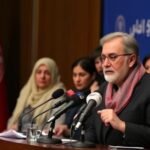
The recent press conference held by Afghanistan’s Foreign Minister Amir Khan Muttaqi in New Delhi has ignited a significant controversy. Critics have condemned the event for the exclusion of women journalists, leading to a strong response from various quarters, including the Ministry of External Affairs (MEA) of India. The MEA clarified that it had no role in the press interaction that has sparked outrage across the country.
Background of the Controversy
The press conference took place on [insert date], and attendees quickly noted the lack of representation of women in the reporting pool. As news of the exclusion spread, it stirred up discussions about gender equality in journalism and the representation of women in pivotal events. This incident highlights ongoing issues surrounding the rights and roles of women in Afghanistan, and the international community’s response to these challenges.
MEA’s Clarification and Denial
The MEA released an official statement emphasizing that it had no involvement in the arrangement of the press conference. The ministry asserted:
- “MEA had no involvement in the press interaction held yesterday by Afghanistan’s Foreign Minister, Amir Khan Muttaqi, in Delhi.”
- “Invitations were sent to a select group of reporters.”
This clarification aimed to distance the Indian government from the incident, amid the backlash that the exclusion of women journalists has generated.
Response from Journalists and Activists
The exclusion of women journalists from the press conference has drawn sharp criticism from media professionals and women’s rights activists alike. Many took to social media to express their outrage, highlighting the importance of having diverse voices represented in such forums.
Several prominent figures in journalism stated that:
- “Gender equality in journalism should be prioritized.”
- “Exclusion of women journalists reflects a broader issue of gender discrimination.”
This furor underscores the necessity for inclusive practices in media and governance, especially in discussions involving international relations.
Political Implications and Criticism
The incident has further strained perceptions of the Indian government’s handling of foreign affairs, especially concerning Afghanistan. Critics argue that failing to advocate for women’s representation in such events demonstrates a lack of commitment to upholding democratic values.
The dialogue around women’s rights in Afghanistan is particularly sensitive. Critics argue that international bodies must consistently advocate for the inclusion of women in all spheres of society.
The Importance of Representation in Media
Media representation is crucial for ensuring balanced narratives. The exclusion of women journalists from significant events perpetuates the cycle of underrepresentation and often leads to skewed portrayals of issues that affect entire populations.
In an era when diverse perspectives are vital, allowing only a select group of male journalists access can diminish the overall quality of reporting. It is essential that inclusivity becomes a standard practice rather than an exceptional occurrence.
Conclusion
The MEA’s denial of involvement in Afghan Foreign Minister Muttaqi’s press conference shedding light on significant issues surrounding gender representation in journalism. As discussions continue, it emphasizes the need for systemic change that prioritizes inclusion and diversity in all areas, especially in media. The public’s reaction and demand for accountability serve as a reminder that engagement and advocacy for women’s rights should remain at the forefront of international discourse.