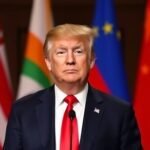
In a surprising post on his Truth Social platform, former President Donald Trump expressed concerns over the growing alliance between India, Russia, and China. Sharing a photo of Indian Prime Minister Narendra Modi, Russian President Vladimir Putin, and Chinese President Xi Jinping together at the Shanghai Cooperation Organisation (SCO) Summit, Trump stated, “Looks like we’ve lost India and Russia to deepest, darkest, China.” This remark highlights significant geopolitical shifts and rising tensions in international relations.
The Significance of the SCO Summit
The Shanghai Cooperation Organisation, founded in 2001, plays a vital role in regional cooperation among its member states. With a focus on security, economy, and cultural exchange, the 2023 summit has shifted the attention to the bonding between India, Russia, and China.
- Security collaboration
- Economic partnerships
- Cultural exchanges
This gathering of such influential leaders might signal a departure from the traditional alliances that have characterized international relations over the past decades.
Trump’s Perspective on International Relations
Trump’s statement reflects a broader concern regarding U.S. foreign policy and its effectiveness in maintaining strong partnerships with allies. His remark about India and Russia could indicate a perceived failure to keep these nations aligned with U.S. interests.
During his presidency, Trump often emphasized America First policies, seeking to redefine traditional diplomatic engagements. Notably, his focus on economic nationalism may have inadvertently encouraged these nations to seek closer ties with China.
The Growing Collaboration Between India, Russia, and China
India, Russia, and China have been strengthening their bilateral ties in various sectors. This collaboration raises eyebrows in the West, especially in the current geopolitical climate.
Some key factors driving their collaboration include:
- Shared security interests in Asia
- Joint efforts against Western sanctions
- Increasing trade and investment
As these countries unite, it creates a new power bloc that could shift global dynamics.
Impact on U.S.-India Relations
The U.S. has long viewed India as a strategic partner in the Indo-Pacific region. However, the growing closeness of India and China might challenge this relationship. The dynamics between the nations have changed significantly, with India continually balancing its interests among the great powers.
Key considerations for U.S.-India relations include:
- Trade agreements
- Military cooperation
- Diplomatic initiatives
The U.S. must adapt to these developments while attempting to maintain its influence in the region.
Russia’s Alignment with China
Russia’s deepening ties with China are also alarming to the U.S. and its allies. Traditionally viewed as a rival to China, Russia’s current stance reflects shifting priorities amid international scrutiny and sanctions.
Understanding Russia’s motivations in aligning with China is essential:
- Economic dependence on Chinese trade
- Shared strategic interests against Western policies
- Increased military cooperation
This partnership might challenge U.S. efforts to isolate China through diplomacy and sanctions.
Conclusion
The comments by Trump about the U.S. losing India and Russia to China convey significant concerns about the future of international alliances. As leaders gather and collaborate, the global balance of power may shift, impacting U.S. interests. The growing partnership among India, Russia, and China poses challenges that require careful diplomatic strategies to ensure that the U.S. can remain a key player on the world stage.