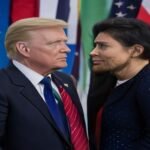
The political landscape in India has been stirred once again, as the Indian National Congress has launched a strong offensive against Prime Minister Narendra Modi. This latest controversy stems from a surprising statement made by U.S. Secretary of State Marco Rubio on the social media platform X. Senator Rubio claimed that the Modi government has committed to purchasing an astounding USD $500 billion in U.S. goods and services, alongside a pledge to halt Russian oil imports. This announcement has ignited a fierce debate, with the Congress demanding immediate answers and transparency from the Prime Minister on such a monumental commitment.
The Genesis of the Controversy: Marco Rubio’s Claim
Senator Marco Rubio’s recent declaration on X sent shockwaves across India’s political spectrum. His statement outlined two significant commitments attributed to the Modi government: a massive half-trillion-dollar procurement from the United States and a halt to oil imports from Russia. While specific details or official communiqués from the Indian government supporting these claims remain elusive, the Senator’s words have created an undeniable stir. This isn’t the first time an ambitious trade target has been discussed; previous interactions between then-President Donald Trump and Prime Minister Modi had also aimed to expand bilateral trade to $500 billion, though by 2030 and without the controversial oil import clause. The reiteration, particularly concerning Russian oil, has escalated the situation significantly.
Congress Demands Clarity: The Opposition’s Stance
Following Senator Rubio’s contentious remarks, the Indian National Congress swiftly targeted Prime Minister Narendra Modi. Opposition leaders expressed deep concern and demanded that the government clarify the veracity and details of these alleged commitments. They emphasized that any such significant pledges, especially those involving vast sums in U.S. purchases and a change in energy policy, must be transparent and openly communicated to the Indian public and Parliament. They questioned whether these “tactical” relations with other countries would come at the “expense” of India’s strategic autonomy and national interest. The opposition seeks to understand the implications for India’s economy, trade balance, and foreign policy independence.
India-US Trade Relations: A Shifting Landscape
The India-U.S. trade relationship has been a cornerstone of their strategic partnership, characterized by ambitious growth targets and burgeoning economic ties. Both nations have expressed a desire to deepen bilateral trade and investment. However, the nature of these proposed commitments, as articulated by the U.S. Senator, introduces new complexities. Such a large commitment to U.S. imports represents a substantial increase and could redefine the trade dynamics. While expanding trade is generally seen as positive, the sheer scale and the unilateral announcement by a U.S. official without prior Indian government confirmation raise questions about the negotiation process and India’s position within it. This incident highlights the need for clear communication channels and mutual understanding in high-stakes international trade discussions.
Geopolitical Implications: Balancing Act with Russia and China
Perhaps the most sensitive aspect of this claim is the alleged commitment to halt oil purchases from Russia. India has historically maintained strong ties with Russia, especially in defense and energy sectors. Post-Ukraine conflict, India significantly increased its imports of discounted Russian crude, a move seen as vital for its energy security and economic stability. A sudden halt, as suggested, would have profound geopolitical implications, potentially altering India’s delicate balance in its relationships with global powers.
Furthermore, analysts have noted that past approaches by some U.S. administrations may have inadvertently pushed India closer to Moscow and Beijing as these three powers look to strengthen economic ties. The current scenario places the Modi government in a challenging position, having to navigate its strategic autonomy while managing expectations from key partners like the U.S. and maintaining its crucial relationships with Russia and China.
Economic Commitments and National Interest
A commitment of this magnitude in U.S. purchases would represent a massive economic undertaking for India. Such a scale of imports could have significant repercussions across various sectors of the Indian economy. Questions arise regarding the impact on domestic industries, job creation, and India’s overall trade balance.
The Congress’s concern about “national interest” is paramount here. Would these commitments truly serve India’s long-term economic goals, including initiatives like “Make in India” and self-reliance? Or would they primarily benefit the U.S. economy? The administration is expected to provide a detailed explanation of how such commitments align with India’s broader economic strategy and development agenda, ensuring that any trade agreements are mutually beneficial and sustainable.
Conclusion: The Path Forward
The controversy surrounding these assertions and the Congress’s subsequent demands for answers has underscored the critical need for transparency and clear communication in India’s foreign policy and trade negotiations. Prime Minister Modi’s government faces the challenge of addressing these concerns, clarifying the official stance on the alleged trade commitment and the sensitive issue of Russian oil imports. As India continues to expand its global economic footprint and navigate complex geopolitical realities, maintaining public trust and ensuring that all international agreements genuinely serve the national interest will be paramount. The outcome of this debate will undoubtedly shape future India-U.S. trade relations and India’s strategic standing on the world stage.